
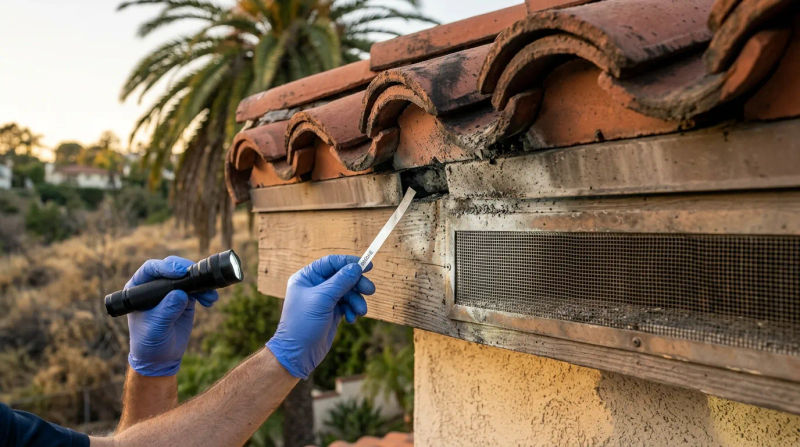
As a roofing supervisor with over 15 years of hands-on experience in Southern California, I’ve seen how our unique environment can reveal hidden issues with a home’s roof. You might be experiencing this right now. The air outside has finally cleared after a wildfire in the Santa Monica Mountains, but a faint, persistent smoky smell lingers inside your home, especially on the upper floors or in the attic. You’ve aired out the house, but the odor remains. This isn't just an annoyance; it’s your home sending a signal that your roof system may have vulnerabilities.
Here in Beverly Hills, the late summer and fall months bring an increased risk of wildfire smoke drifting over our communities. While we are all accustomed to hazy skies, that smoke shouldn't be making its way inside your home. When it does, it's often a case of roof smoke intrusion, where microscopic smoke and soot particles are pulled into your living space through small, unseen gaps in your roof. This is more than an air quality issue; these same gaps can become pathways for dangerous embers during a more immediate fire threat. Understanding the signs is the first step toward securing your home.
Common Signs and Symptoms
Identifying the evidence of smoke intrusion can be straightforward if you know what to look for. Our technicians are trained to spot these subtle clues during inspections, but homeowners can often detect the initial warning signs themselves. Pay close attention to your home's upper levels, particularly after a nearby fire or on a day with heavy smoke.
- A Lingering Smoke Smell in the Attic: This is the most direct symptom. Your attic should be a sealed-off buffer zone, not a collector for outside air. If you open your attic hatch and are greeted with a smell of old smoke days after the air quality has improved, it’s a red flag. This points to one of the primary attic smoke smell causes: negative air pressure pulling smoky air in through unsealed openings.
- Dark Stains or Soot Around Vents: Carefully inspect the area around vents inside your attic. You may notice faint, dark, or greasy-looking soot stains around roof vents, including turbine vents, ridge vents, or gable-end vents. These stains are physical deposits of soot and ash that were drawn in with the smoke.
- Discoloration Near Ceiling Penetrations: Look at the ceilings in your top-floor rooms. Do you see any slight discoloration or dark smudges around the edges of recessed lighting cans, bathroom exhaust fans, or skylights? These fixtures penetrate the ceiling barrier to the attic, and any air leaks will deposit smoke residue at these points.
- Visible Haze or Airborne Dust: On a sunny day, go into your attic and turn off any lights. If you can see beams of light entering through gaps, that's a clear problem. Shine a powerful flashlight through the space; if you see an unusual amount of dust or a fine haze floating in the beam, it could be suspended soot particles that have been pulled inside.
- Telltale Signs Around Skylights: Skylights are a common culprit. One of the key skylight curb air leak signs is a faint smoky odor that is strongest near the unit. You might also notice more dust accumulating on the glass or frame than elsewhere in the room, or even feel a slight draft on a windy day.
What Causes This Problem
Smoke doesn't force its way into your home; it's actively pulled in by natural air pressure dynamics and building vulnerabilities. Understanding these root causes helps explain why a seemingly solid roof can still have problems.
The primary driver is a phenomenon called the “stack effect.” Warm air inside your home is buoyant and rises. As it escapes through the upper portions of your house, it creates a slight negative pressure in the lower portions, pulling in replacement air from outside. If your roof and attic aren't properly sealed, this effect will pull air - and any smoke it contains - in through any available gap.
Common entry points our crews find during inspections include:
- Unsealed Roof Penetrations: Every roof has multiple penetrations for plumbing pipes, heating flues, and electrical masts. Each one is sealed with flashing and a rubber boot or sealant. Over time, sun exposure and temperature fluctuations cause these materials to dry out, crack, and pull away from the pipe or roof deck, creating a perfect, hidden pathway for air and smoke.
- Aging or Damaged Roof Vents: Attic ventilation is critical, but the vents themselves can become points of failure. Older turbine vents can develop gaps in their collars, ridge vents can become dislodged, and the screens on gable or soffit vents can get damaged, allowing unfiltered air to enter.
- Compromised Skylight Seals: A skylight is essentially a window in your roof, and it relies on multiple seals to stay weathertight and airtight. The gaskets around the glass can shrink and crack, and the flashing that integrates the skylight’s frame (or curb) with the roofing material can fail. These are classic skylight curb air leak signs that allow for significant air exchange.
- Gaps in the Building Envelope: In some homes, especially older ones, there can be small gaps between the top of the wall and the roof deck. Homes built in the post-war era, such as the classic 1950s ranch-style houses found in parts of Southern California, were built efficiently but the sealants and materials used decades ago are now well past their service life. On these low-pitched roofs, the original seals around vents and penetrations are particularly susceptible to degradation, creating subtle but persistent air leaks.
When to Call a Professional
While a homeowner can spot many of the interior signs, a thorough diagnosis requires a safe and systematic roof inspection. Attempting to walk on a roof, especially a tile or steeply pitched one, is extremely dangerous without the proper safety equipment and training.
You can perform some initial checks from the ground or inside your home:
- Use binoculars to look for damaged vent screens or cracked sealant around pipes from a safe distance.
- Check your attic for the odors and stains mentioned earlier, using a stable ladder and wearing a dust mask.
- Note any drafts or smells around interior fixtures like skylights and recessed lights.
However, pinpointing the exact source of roof smoke intrusion requires professional expertise. When our technicians perform an inspection, they follow a standardized process to check every potential vulnerability. We know the common failure points for different roof types - tile, shingle, and flat-roof systems - and can identify issues that are nearly invisible to the untrained eye. An experienced professional can assess the condition of flashing, underlayment, and sealants to give you a complete picture of your roof's health.
More importantly, a professional inspection isn't just about finding air leaks. It's about ensuring your roof is prepared for Southern California's other major threat: fire. The same gaps that let smoke in can also allow wind-blown embers to enter your attic, where they can ignite insulation and framing. Addressing these vulnerabilities now, before a red-flag warning day, is a critical part of home fire defense.
Conclusion
That persistent smoky smell in your home is more than just a nuisance; it's a clear indicator that your roof's defensive barrier has been compromised. What begins as an indoor air quality issue from attic smoke smell causes can represent a serious vulnerability during peak fire season. The key takeaways are to recognize the signs - lingering odors, soot stains around roof vents, and drafts near skylights - and understand that they point to hidden openings in your roof system.
Waiting for the problem to worsen can lead to more significant air quality degradation and, critically, leaves your home exposed to ember intrusion. Acting early by having your roof inspected provides peace of mind and allows for targeted repairs before a small issue becomes a major risk.
If you notice any of these signs, contact a local roofing professional for an inspection. They can help you identify the source of the problem and ensure your home is safe, secure, and ready for whatever the season brings.