
As a Senior Roofing Project Supervisor with over 15 years of hands-on experience in Beverly Hills, the first question homeowners almost always ask me relates to cost. It’s completely understandable. A roof is your home's primary shield, but budgeting for its upkeep can feel daunting. My goal here is to provide a transparent, no-nonsense guide to understanding roof valley repair costs, so you can make confident, informed decisions for your property.
Here in August, with fire season active and a fine layer of ash and debris settling on our roofs, it’s the perfect time to think about this. That debris often collects in the valleys - the channels where two roof planes meet. When the first autumn rains arrive, this buildup can trap moisture, accelerating wear on flashing and underlayment and turning a minor issue into a major leak. By understanding the potential costs now, you can budget effectively and address weak points before they become emergencies.
Average Costs in Beverly Hills
Roof valleys are critical components. They channel an immense volume of water, making them one of the most common areas for leaks to develop. Because of their importance, repairs need to be meticulous. In Beverly Hills, where we see many beautiful but complex Spanish-style tile roofs, the work is often more labor-intensive.
Based on the hundreds of projects our crews have completed, here is a realistic breakdown of what you can expect for Beverly Hills roof valley pricing. Please note these are general ranges; a detailed, on-site inspection is always necessary for a precise quote.
- Minor Localized Repair ($800 - $1,800): This typically covers a small, contained problem. It might involve replacing a few cracked or slipped tiles, sealing a small section of compromised flashing, or addressing a minor clog that has caused localized water intrusion. This is for situations where the underlying materials are still in good condition.
- Moderate Sectional Repair ($2,000 - $5,500): This is the most common type of valley repair. It involves carefully removing a section of roofing material (like clay or concrete tiles), replacing a significant portion of the metal flashing and the underlying waterproof membrane, and then professionally reinstalling the original materials. This price range typically covers a 10- to 20-foot section of a valley.
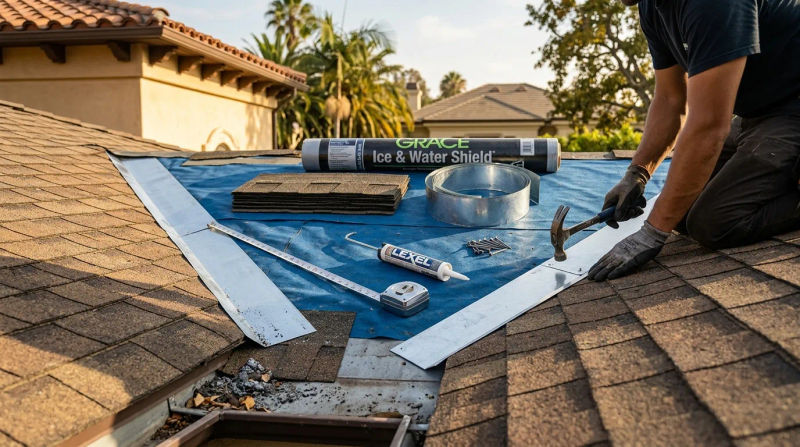
- Full Valley Rebuild ($6,000 - $15,000+): For extensive, long-term water damage, a full rebuild is necessary. This involves stripping the valley down to the roof deck, replacing rotted wood sheathing, installing a new multi-layered waterproofing system (ice and water shield plus underlayment), fabricating and installing new metal flashing, and then reinstalling the roof covering. The open valley flashing cost 90210 for a custom copper or lead-coated copper system on a historic home can push the price toward the higher end of this range.
Factors That Affect Price
The final roof valley repair cost is never one-size-fits-all. As a supervisor, my job is to assess several key variables during an inspection. These are the primary factors that our technicians evaluate when creating a detailed estimate.
- Roofing Material: The material on your roof is the biggest cost driver. The Spanish and Mediterranean tile roofs common in Beverly Hills require significantly more labor to repair than asphalt shingles. Each tile must be carefully removed, stacked, and reinstalled without breakage. Slate is even more delicate and costly to work with.
- Extent of Damage: The true scope of work often isn't visible from the surface. A few cracked tiles might hide a completely saturated and rotted underlayment and roof deck. The more water has penetrated, the more layers need to be replaced, which increases both material and labor costs.
- Roof Complexity and Pitch: A steep, high-pitched roof requires more extensive safety equipment and staging, which adds to the labor cost. Likewise, a valley that intersects with a chimney, a skylight, or another roof dormer is far more complex to flash and seal correctly than a simple, straight valley.
- Accessibility: Is your home surrounded by dense, mature landscaping? Is the roof three stories high? Difficult access requires more time for our crews to set up equipment and transport materials, which is factored into the overall price.
- Underlying Structural Issues: Sometimes, removing the old valley materials reveals deeper problems, such as rotted fascia boards or damaged rafter tails. These structural repairs must be addressed before the new valley can be installed, adding to the project's scope and cost.
How to Get the Best Value
Getting the best value isn't about finding the cheapest price; it's about investing in a durable repair that you won't have to worry about for years to come. A poorly executed