
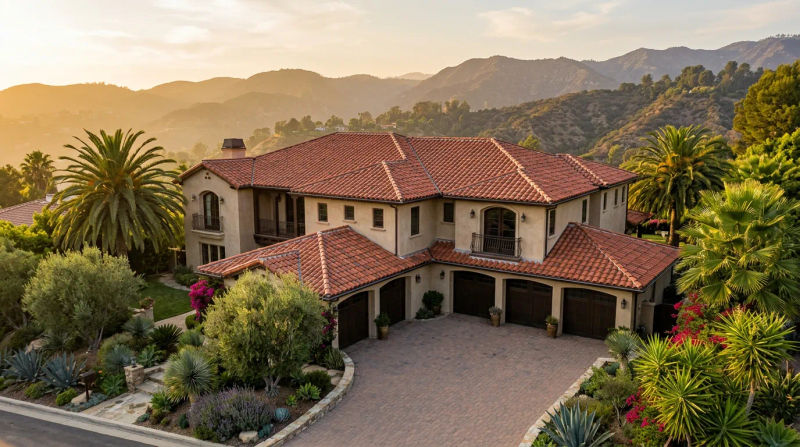
As a Senior Project Supervisor with James Macdonald's roofer Co, I’ve seen firsthand how Southern California's fire season can impact homes, even those miles away from the flames. The call we received in late August was a familiar one. A homeowner in a beautiful canyon-adjacent pocket of Beverly Hills had just returned home after a mandatory evacuation due to a nearby wildfire. While their property was thankfully untouched by the fire itself, their roof told a different story. A thick, grey blanket of ash and soot covered every inch of their classic 1970s-era Spanish tile roof. The homeowner was worried, and rightly so. With the marine layer rolling in each morning and the first rains of the season on the horizon, they knew that ash could turn into a corrosive slurry, potentially hiding or creating serious problems. They needed an expert assessment, and they needed it fast.
That’s the kind of situation where our team at James Macdonald's roofer Co excels. It’s not just about a cosmetic cleanup; it’s about understanding the unique ways that ash, soot, and wind-driven debris can compromise a roofing system. The homeowner’s concern wasn’t just about aesthetics - it was about preventing a small issue from becoming a catastrophic leak when the weather turned. They needed assurance that their home's first line of defense was still secure.
The Assessment
I personally led the inspection at the Beverly Hills property. From the ground, the roof looked dirty but intact. However, my 15+ years of experience have taught me that the real story is always found up close. Once my technician and I were safely harnessed on the roof, the true extent of the post-fire exposure became clear. The ash was more than just a dusty layer; it was gritty and had already begun to collect in the pans of the tiles and along the critical intersections of the roof, like the valleys and the ridge line.
Our methodical assessment process involved several key steps:
- Tile Integrity Check: We walked the roof carefully, checking for any tiles that were cracked, chipped, or had slipped from their positions due to the high winds that often accompany a wildfire. We found several tiles near the main ridge that had shifted, exposing the black paper underlayment beneath.
- Mortar and Ridge Cap Inspection: This was our primary area of concern. We closely examined the mortar joints holding the ridge cap tiles in place. The combination of heat, wind, and settling ash had caused the old mortar to become brittle and crack in multiple sections. This is a common failure point, and we identified it as a critical vulnerability for a Benedict Canyon fire roof repair.
- Underlayment Evaluation: In the areas where tiles had slipped, we gently lifted the surrounding tiles to inspect the underlayment. We were looking for signs of heat embrittlement or moisture that might have wicked in with the ash. We found one small section, no larger than a square foot, where the underlayment felt brittle to the touch, a clear sign that a proactive underlayment patch after smoke damage would be necessary to prevent future leaks.
- Waterway and Joint Analysis: The fine particulate matter from the ash had worked its way deep into the tile overlaps and headwalls. When mixed with the slightest moisture, this creates an acidic paste that can accelerate the degradation of both the tiles and the underlying materials. The homeowner’s concern was valid; leaving this unattended was an invitation for water to find its way in.
After documenting our findings with photos and detailed notes, I met with the homeowner. I explained that while the damage wasn't widespread, the compromised ridge line and slipped tiles were significant risks. We needed to perform a targeted tile roof repair in Beverly Hills that focused on restoring these critical areas before the rainy season began.
Our Solution
With the homeowner's approval, the James Macdonald's roofer Co team scheduled the work for later that same week. Our goal was to provide a robust, long-lasting solution, not a temporary patch. Our plan was precise and efficient.
Our 3-person crew began by setting up comprehensive safety and protection measures. We laid tarps to protect the home's stucco siding, windows, and landscaping from debris during the repair process. The first operational step was a careful, low-pressure roof cleaning to remove all the accumulated ash and soot without forcing water under the tiles.
With a clean surface to work on, our real repair work began. The core of the project was a complete Spanish tile ridge rebedding. This is a far more durable solution than simply patching over the cracked mortar. The process involved:
- Careful Removal: We meticulously removed all the clay ridge cap tiles along the main ridge, numbering them so they could be reinstalled in the exact same order.
- Debris Clearing: We chipped away and completely removed all the old, failed mortar bed, scraping the surface clean down to the underlayment.
- Underlayment Patch: At this stage, we addressed the brittle section of underlayment we had identified. We cut out the compromised material and installed a new, high-quality synthetic underlayment patch, properly integrating it with the existing layers to create a seamless waterproof barrier.
- New Mortar Bed: We then mixed and applied a fresh, polymer-modified mortar bed. This modern material offers superior adhesion, flexibility, and resistance to cracking compared to older mortar formulas.
- Resetting the Tiles: Finally, we expertly reset the original ridge cap tiles into the new mortar, ensuring perfect alignment and a watertight seal. We also addressed the other slipped tiles on the roof plane, refastening them securely in their proper place.
The entire project was executed with the precision and organization that define a James Macdonald's roofer Co job. We completed the work in just two days, ensuring minimal disruption for the homeowner and their family.
The Results
The transformation was both immediate and reassuring. Before, the roof looked tired, dirty, and vulnerable, with a visibly cracked and uneven ridge line. After our team was finished, the roof's vibrant color was restored, and the ridge line was sharp, clean, and structurally sound. The homeowner could see the difference from the street - their home's curb appeal was fully restored.
More importantly, the results went far beyond aesthetics:
- Watertight Security: The primary outcome was a completely secure and watertight roof. The rebedded ridge and repaired tiles eliminated the risk of leaks, giving the homeowner total peace of mind heading into winter.
- Prevented Costlier Damage: By addressing the issue proactively, we prevented the ash and moisture from causing rot, mold, or interior water damage that would have been exponentially more expensive to fix down the line.
- Added Value: As part of our closing process, we provided the homeowner with a detailed roof-zone evacuation checklist and a maintenance plan tailored to their property. This empowers them with knowledge on how to prepare for future fire season events, a value-add that our clients greatly appreciate.
The homeowner was thrilled with the professionalism, speed, and thoroughness of our crew. They mentioned how relieved they were to have found a company that understood the specific challenges of post-fire roof care and didn't just propose a superficial cleaning.
Conclusion
This Beverly Hills project is a perfect example of how unseen risks can develop after a wildfire event, even without direct fire contact. A proactive inspection and targeted repair can make all the difference, turning a moment of anxiety into one of confidence and security. The success of this tile roof repair in Beverly Hills was rooted in the expert assessment and meticulous execution delivered by our team. We didn't just clean a roof; we restored its integrity and provided our client with lasting peace of mind.
At James Macdonald's roofer Co, we combine decades of hands-on experience with a commitment to doing the job right the first time. We are proud to be the trusted partner homeowners turn to when quality and reliability matter most.
Ready for your own James Macdonald's roofer Co experience? Contact us today for a free inspection.